

What if actuarial science could do more than quantify uncertainty? What if it could help identify risk earlier, support better decisions and contribute to preventing disease before it becomes a crisis?
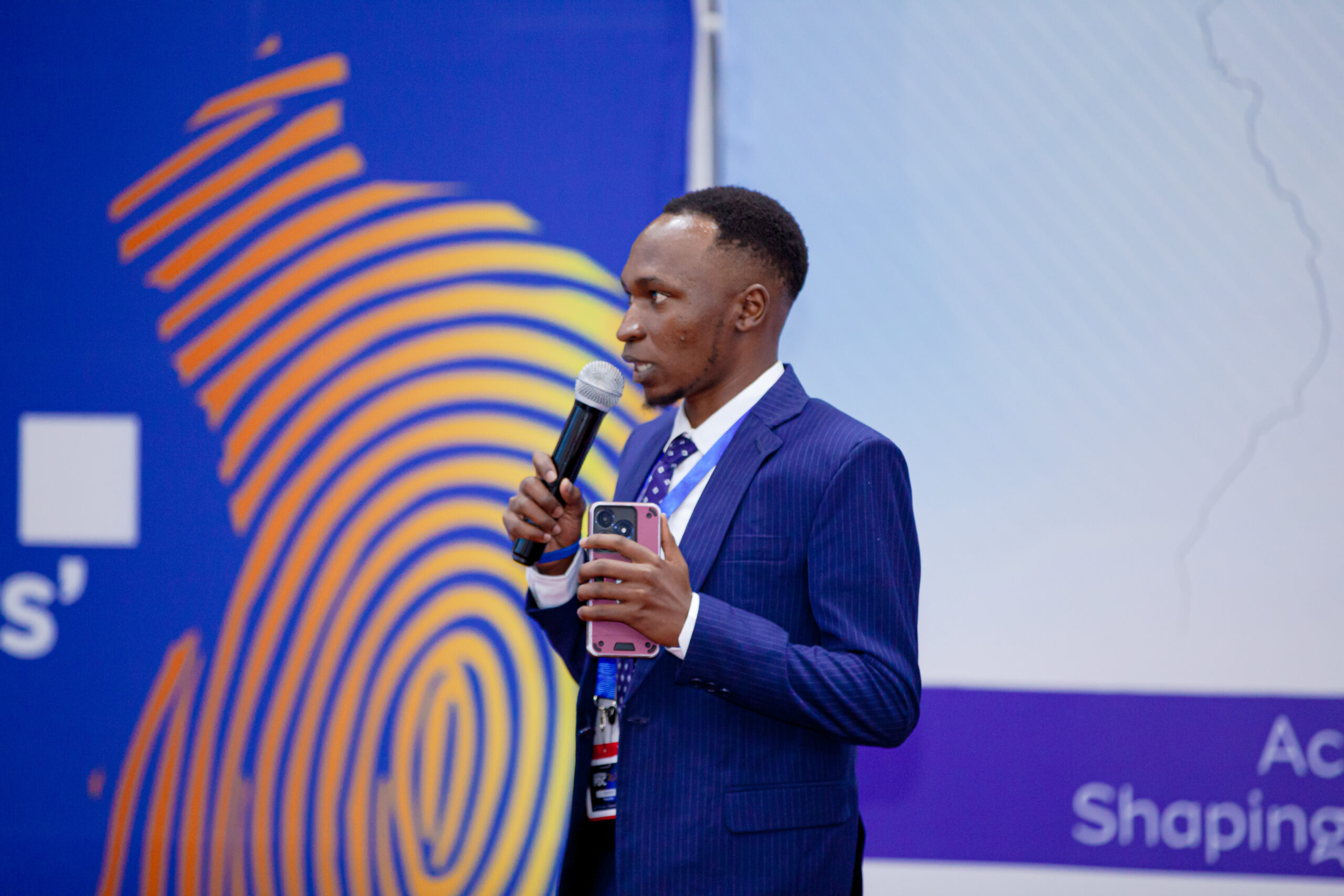
This is the thinking behind MammoRisk, an innovative AI and actuarial breast-cancer risk platform developed by Gideon Kiarie, a student at Murang’a University. Developed through the Product Development Competition, MammoRisk explores how actuarial science, artificial intelligence and healthcare can come together to address one of Kenya’s most important health challenges.Breast cancer presents a complex challenge for individuals, families, healthcare systems and insurers. While screening plays an important role in identifying abnormalities, there is an opportunity to go beyond what is visible at the point of examination and explore an individual’s longer-term risk.
MammoRisk is built around that opportunity.The platform combines AI-based mammogram analysis, clinical information and actuarial risk modelling to estimate an individual’s future breast-cancer risk over 3-, 5-, 7- and 10-year horizons. A mammogram or screening image is uploaded with appropriate consent, after which an AI model analyses relevant image features. These findings can then be combined with clinical information such as age, breast density, family history, previous biopsy and hormonal factors.The actuarial risk engine brings these inputs together to generate estimated future risk and translate the results into understandable risk bands.The idea is simple but ambitious: turn available screening and clinical information into risk intelligence that can support earlier action.
That is also what makes MammoRisk different.Rather than functioning solely as an image-classification tool, the platform is designed to connect what AI can identify from an image, what clinical information can tell us about an individual and what actuarial modelling can estimate about future uncertainty.The result is intended to support three groups within the healthcare and insurance ecosystem.For women, MammoRisk could provide a clearer understanding of estimated future risk and support conversations around appropriate screening and preventive action. For clinicians, it could provide structured risk summaries to complement professional judgement and support follow-up planning. For insurers, the platform could create opportunities for prevention-focused wellness programmes, screening campaigns and population risk management.
This creates an important bridge between healthcare and insurance.Insurance has traditionally focused heavily on managing the financial consequences of risk after an event occurs. Risk intelligence introduces another possibility: using data to understand risk earlier and potentially support more targeted prevention. This could create opportunities for insurers, healthcare providers, employers, NGOs and public health programmes to develop more proactive approaches to screening and wellness.For Kenya, the opportunity is particularly compelling. As healthcare becomes increasingly data-driven and technology-enabled, solutions that connect health information, risk modelling and prevention have the potential to create new ways of addressing both health and financial challenges.
But the most important story behind MammoRisk may not be the technology.It is the actuarial imagination behind it.Actuarial science has traditionally been associated with insurance, pensions, investments, statistics and financial risk. These remain core areas of the profession, but technology is opening new frontiers. Tomorrow’s actuary will increasingly work alongside clinicians, data scientists, software engineers, entrepreneurs and AI specialists – not only interpreting risk, but helping design the systems and products that use it.
MammoRisk demonstrates what this shift can look like.It shows how concepts such as probability, survival modelling and risk assessment can move beyond the classroom and become the foundation of a product designed around a real societal problem.This is where the Product Development Competition becomes more than a competition.At its best, product development challenges students to identify problems, question conventional approaches, develop assumptions, build models and turn ideas into products with potential real-world value.During the product development journey, Daniel challenged the delegations to take their ideas further – to think beyond the competition and consider what it would take to turn promising concepts into solutions capable of creating real impact.
That challenge captures the true spirit of innovation. Winning a competition may be an achievement, but building something that continues to evolve after the competition is where the greater opportunity lies.MammoRisk is currently at the prototype stage. This makes the next phase especially important: testing the concept, refining the model and exploring collaboration with clinical, actuarial, technological and industry partners.With the right validation, expertise, partnerships and investment, a student-led prototype such as MammoRisk could potentially develop into a solution operating at the intersection of AI, digital health, actuarial science and insurance.
For healthcare organisations, this could mean exploring new approaches to risk-informed prevention. For insurers, it could support the development of data-driven wellness and screening programmes. For technology partners, it could create opportunities to advance AI and digital-health infrastructure. For researchers, it opens important questions around modelling, validation, fairness and Kenya-specific calibration. For investors, it offers an opportunity to engage with an emerging technology concept while it is still being shaped.
Yet innovation in healthcare must be matched by responsibility.MammoRisk is designed as a risk-stratification and decision-support platform, not a diagnostic system. It does not replace radiologists, biopsy, clinical examination or professional medical judgement. Before real-world deployment, the concept would require rigorous clinical validation, Kenya-specific calibration, fairness testing, robust data governance, privacy safeguards and appropriate regulatory and ethical review.
Responsible innovation is therefore central to the journey.The ambition is not simply to build an intelligent platform, but to build one that is accurate, transparent, fair, secure and clinically useful.And perhaps this is the larger lesson MammoRisk offers the actuarial profession.The future will require actuaries who are willing to cross boundaries. Actuaries who understand technology. Actuaries who can work with AI. Actuaries who can communicate complex risk. Actuaries who can build products. And actuaries who can look at a problem that has never traditionally been considered actuarial and ask:
“What can I create with what I know?”
MammoRisk is one answer.It takes actuarial thinking beyond numbers and places it at the intersection of prevention, healthcare and technology. It demonstrates how a risk model can become part of a digital product, how AI can complement actuarial analysis, and how a student idea can open doors to research, partnerships, investment and real-world impact.The Product Development Competition may be where the idea begins, but it does not have to be where the journey ends.
MammoRisk is one such idea- and its journey is only beginning.
Taking Innovation Further
MammoRisk is currently at the prototype stage, and its next chapter will depend on collaboration. The Actuarial Students’ Society of Kenya (ASSK) welcomes conversations with healthcare institutions, insurers, technology companies, researchers, investors and other partners interested in supporting, validating, developing or exploring the potential of student-led actuarial innovations.For partnership and collaboration opportunities around MammoRisk and other innovations emerging from the Product Development Competition, Contact Us.
The next generation of actuaries is not simply preparing for the future.
They are building it.